Leaving the hospital after a microdiscectomy, laminectomy, or spinal fusion brings an overwhelming wave of relief—followed quickly by anxiety. Once the nurses and doctors step away, everyday actions like rolling over in bed or sitting up to drink tea feel daunting.
That hesitation is completely normal. Spine surgery relieves the mechanical compression on your nerves, but it’s your post-operative rehabilitation at home that protects the surgical repair, prevents scar tissue adhesions, and reactivates the muscles that keep your spine stable.
The Golden Rule: Remember the “BLT” Ban
For the first six to eight weeks after surgery, remember this simple acronym: No BLT.
- No Bending: Don’t bend forward at your waist to pick things off the floor or tie your shoes. Hinge at your knees and hips while keeping your spine straight, or use a reacher tool.
- No Lifting: Don’t lift anything heavier than 2 to 3 kilograms (a filled water bottle or small tea kettle). Have family members handle heavy bags and groceries.
- No Twisting: Keep your shoulders and hips aligned. If you need to turn to look at someone, turn your entire body with your feet instead of twisting your torso.
How to Get In and Out of Bed Safely: The Log-Roll
Twisting while getting out of bed puts dangerous rotational torque on your healing incision. Practice the log-roll technique every single time you move:
- Lie on your back with knees bent and feet flat on the bed.
- Gently tighten your stomach muscles.
- Roll your entire body—shoulders, hips, and knees—together in one unified motion onto your side, just like a solid log rolling over.
- Drop your legs over the edge of the mattress while simultaneously pushing your upper body up with your arms.
- Sit upright on the edge of the bed for 30 seconds before standing so your blood pressure adjusts comfortably.
Week-by-Week Recovery Phases at Home
Weeks 1 to 2: Gentle Walking and Wound Care
Your main job right now is gentle circulation and letting your incision close cleanly:
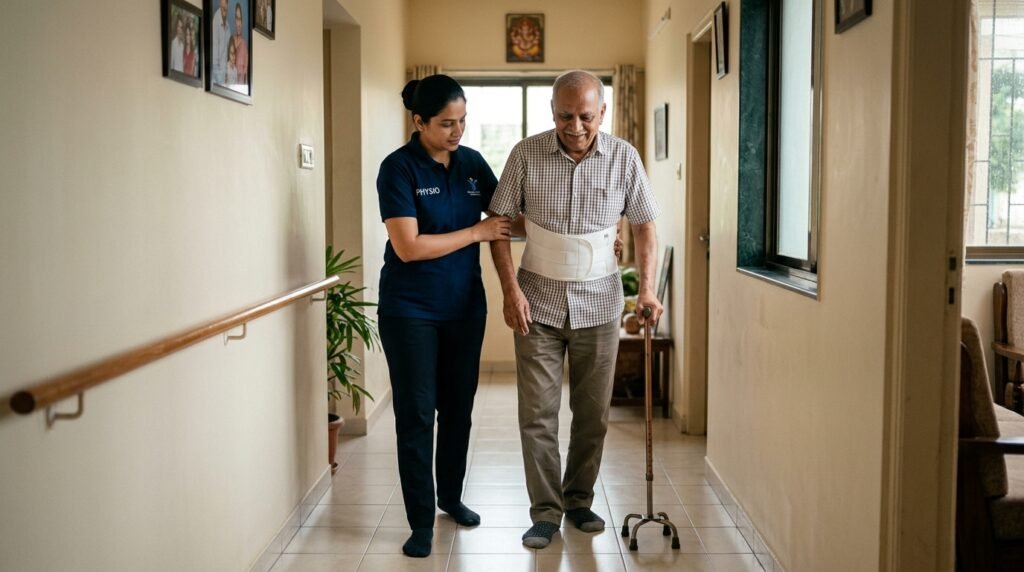
- Short, Frequent Walks: Walk for 5 to 10 minutes around your apartment hallway three times a day. Walking prevents stiffness and keeps blood flowing to the healing spine.
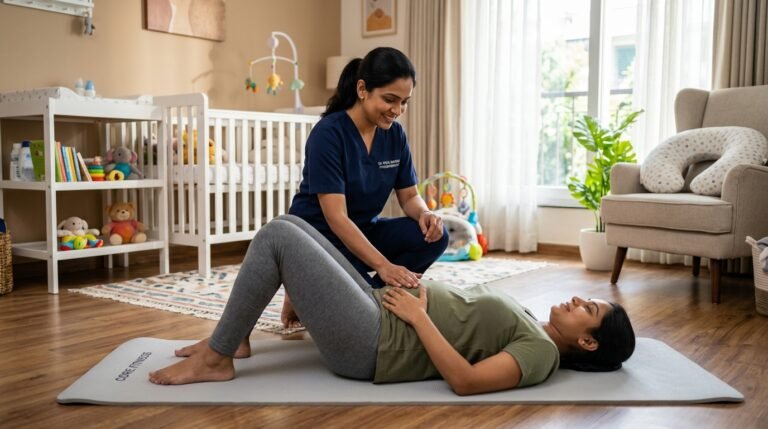
- Transversus Abdominis Bracing: Lie on your back, breathe out gently, and draw your lower abdomen inward toward your spine as if zipping up a snug pair of trousers. Hold for 5 seconds without holding your breath.
- Ankle Pumps: Keep blood circulating in your lower legs while resting.
Weeks 3 to 6: Building Endurance & Gentle Core Activation
Once your surgeon removes the surgical stitches or staples and clears you for progressive movement:
- Heel Slides: While lying on your back, gently slide one heel along the bedsheet toward your hip, keeping your lower back in a comfortable, neutral posture. Slide back down and alternate legs.
- Supported Balance Work: Standing near a counter, practice shifting your weight smoothly from one foot to the other to rebuild your body’s joint awareness (proprioception).
- Extending Your Walking Routine: Gradually increase your walking time to 20 or 25 minutes of steady, comfortable steps daily.
Weeks 7 to 12: Real-World Strength and Everyday Independence
Now you’re preparing to return to everyday activities and office work:
- Bird-Dog Drills: On hands and knees, slowly extend one arm forward and the opposite leg backward, focusing on keeping your lower back perfectly steady with zero sagging.
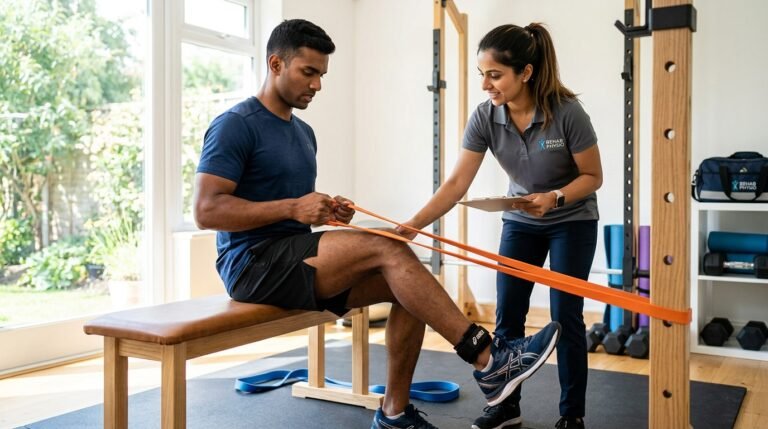
- Resistance Band Work: Gentle seated or standing rows to strengthen your mid-back posture without twisting.
- Ergonomic Work Assessment: Learning how to sit with proper lumbar support for short working intervals.
Frequently Asked Questions
Do I have to wear my lumbar belt all the time?
Always follow your surgeon’s specific discharge instructions. Generally, rigid lumbar belts or corsets are worn whenever you’re up walking or standing, and removed when lying flat in bed to sleep.
Is it normal to still feel tingling in my leg after surgery?
Yes. Nerves that were compressed for months take time to heal and regenerate. Mild tingling or patchy numbness often waxes and wanes for several weeks as nerve inflammation calms down.
Why is in-home physiotherapy so important after spinal surgery?
Traveling across traffic, climbing steps into a clinic, and sitting in stiff waiting room chairs can trigger severe muscle spasms and jeopardize your surgical outcome. Home physical therapy brings hospital-grade rehabilitation directly to your bedside safely.
This article provides general information and does not replace individual medical advice, professional assessment or emergency care.