The surgery itself takes about two hours, but the real transformation happens right in your living room over the next eight weeks. When patients return home after a total hip replacement, the hardest hurdle usually isn’t doing the exercises—it’s overcoming the fear of moving.
One of the first things family members in Noida ask when our physiotherapists arrive for an initial home visit is: “Can the new joint slip out if my father sits down?” or “How do we get him into the washroom safely?”
Those are completely valid worries. In those early days after hospital discharge, taking trips to an outpatient clinic across traffic-heavy roads creates unnecessary stress and physical risk. Rehabilitating at home gives you a controlled, comfortable space to build strength back up, step by step.
The 4 Hip Precautions You Cannot Ignore
In the first two to three months, the soft tissues and capsule around your new prosthetic joint are repairing themselves. Depending on whether your surgeon used a posterior or anterior approach, you’ll need to keep these rules top of mind:
- Keep Your Legs Uncrossed: It sounds simple, but habitual leg-crossing while sitting or lying down is a common reflex. Keep both feet flat on the floor or rest them parallel on a footstool.
- Respect the 90-Degree Rule: Never bend your torso forward toward your thighs past a right angle. That means ditching deep, plush sofas and low stools. Use a raised toilet seat in your bathroom and stick to dining chairs with firm cushions.
- Don’t Twist on Your Operated Leg: When you need to turn around, take small, deliberate steps with your feet rather than pivoting your torso over your hip.
- Use a Pillow Between Your Knees at Night: Whether you sleep on your back or your non-operated side, keep a firm pillow between your knees so your upper leg doesn’t collapse inward while you’re asleep.
Your Week-by-Week Roadmap at Home
Weeks 1 to 2: Waking Up Muscles & Beating Swelling
During the first fortnight, your main enemies are sluggish circulation and localized swelling. You won’t be doing heavy workouts—just steady, gentle reactivation:
- Ankle Pumps: Point your toes forward, then pull them up toward your shins. Do 20 of these every single hour you’re awake. It’s the simplest way to keep calf circulation flowing and ward off blood clots.
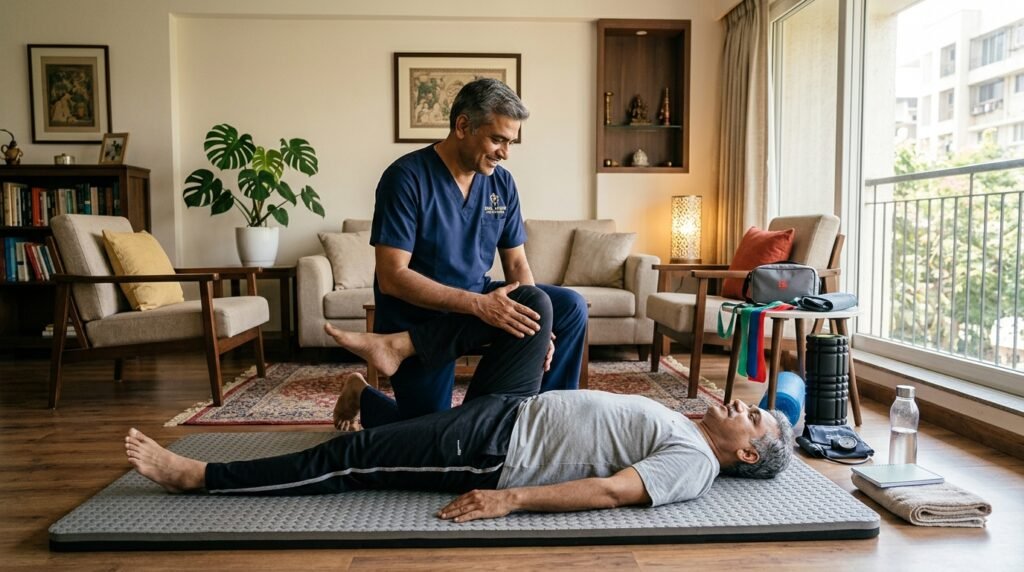
- Static Quad Sets: Lie flat on your back and tighten your front thigh muscle by pushing the back of your knee down into the mattress. Hold it tight for 5 seconds, breathe normally, and let go. Aim for 10 reps, 3 times a day.
- Gentle Heel Slides: Slowly slide your heel toward your buttocks along the bedsheet, stopping well before your hip hits that 90-degree angle. Slide back down slowly.
Weeks 3 to 4: Moving From Walker to Walking Stick
By week three, surgical soreness usually begins to dial down, replaced by muscular fatigue as you take more steps around your home. This is where balance work starts:
- Transitioning Your Walking Aid: Under your visiting physiotherapist’s guidance, you’ll practice moving from a two-wheeled walker to a single elbow crutch or quad-stick, held on your unoperated side.
- Standing Leg Lifts: Hold onto the kitchen counter or a sturdy table for support, and gently lift your operated leg out to the side. Keep your back straight—no leaning sideways.
- Chair Stands (Sit-to-Stand): Practicing standing up from a firm, elevated chair using mostly your leg strength rather than hauling yourself up with your arms.
Weeks 5 to 8: Normal Walking Rhythm and Conquering Stairs
Now the focus shifts to getting rid of any lingering limp and moving around your building or garden with ease:
- The Stair Rule You Must Remember: Always remember the classic phrase: “Up with the good, down with the bad.” Going up, step with your strong leg first. Going down, lead with your walking stick and operated leg.
- Building Real Walking Stamina: Graduating from indoor hallway laps to gentle 15-minute walks in your society park in the morning.
Warning Signs That Mean “Call Your Doctor Today”
Mild swelling around the knee and ankle is very standard. But don’t hesitate to contact your surgeon if you spot any of these:
- A sudden spike in groin or thigh pain that makes putting any weight on the leg impossible.
- Redness, excessive warmth, or oozing along the incision that seems to be spreading.
- Deep, tender pain in your calf or sudden shortness of breath.
- A fever running above 101°F.
Frequently Asked Questions
When can I start home physiotherapy after my surgery?
Most patients start within 24 to 48 hours of getting home from the hospital. The sooner we help you navigate your bathroom, bedroom, and walking corridors safely, the smoother your recovery will be.
How long will it take before I can walk without a stick?
Every person’s baseline strength is different, but most patients leave walking aids behind between weeks 6 and 10, once their glutes and quads can comfortably support their weight without a limp.
When can I sleep on my side again?
You can usually sleep on your non-operated side around week 3 or 4, provided you keep a firm pillow firmly wedged between your knees to protect hip alignment.
This article provides general information and does not replace individual medical advice, professional assessment or emergency care.